Source Automatic Pigment DTF Printer for Textile, Paper, and Film
Compare 30 automatic pigment dtf printer models from verified Chinese suppliers. These units support platen and pressure wheel structures with USB interfaces for printing on PET film, cloth, and paper using pigment ink.
Key considerations
Products List




Comprehensive Sourcing Guide
Strategic Sourcing Guide for Automatic Pigment DTF Printers
Understanding the Technical Architecture of Automatic Pigment Systems
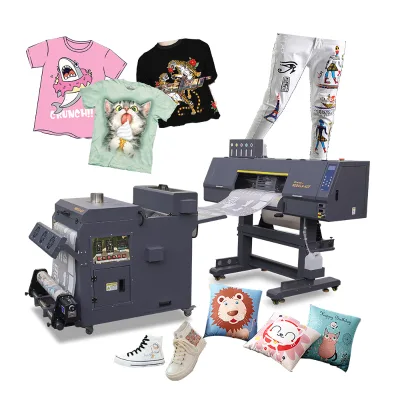
The procurement of an automatic pigment Direct-to-Film (DTF) printer requires a precise understanding of the underlying mechanical and digital architecture. Unlike traditional textile printing methods, these systems integrate specific printhead technologies with automated cleaning and media handling to ensure consistent output. Based on current market offerings, the core of these machines often utilizes Epson F1080-A1 printheads, which are selected for their reliability in handling pigment inks. The printing interface is a critical component, with observed configurations ranging from USB 2.0 to USB 3.0, directly impacting data transfer speeds and workflow efficiency.
The physical structure of the printer is equally vital for operational stability. Most observed units employ a platen press structure, which provides a flat, stable surface for printing on various media types, including PET film. This structure is distinct from pressure wheel systems found in other printing categories, offering superior flatness for detailed graphics. The printing resolution is a key performance indicator, with standard configurations supporting 8-pass modes at 720x1440dpi. This resolution ensures high-fidelity image reproduction, essential for the intricate designs often required in the garment and textile sectors. The print speed is typically rated at approximately 1.2 square meters per hour, a figure that buyers must contextualize against their production volume requirements.
The ink system is defined by the use of pigment ink, which offers superior durability and color fastness compared to dye-based alternatives. This choice of ink is fundamental to the "pigment" designation in the product keyword. The system configuration is designed to operate on Windows 10 and Windows 11 environments, ensuring compatibility with modern RIP (Raster Image Processor) software. Standard software packages include Riin 10.5, with options for Flexiprint and Maintop, allowing for advanced color management and workflow automation. The image format support extends to common file types such as JPG, TIF, and PDF, facilitating seamless integration with existing design workflows.
Operational Specifications and Environmental Constraints
When evaluating an automatic pigment DTF printer, buyers must scrutinize the operational specifications to ensure the machine fits within their physical and environmental constraints. The working environment is a critical factor; observed data indicates a temperature range of 15 to 35 degrees Celsius is required for optimal performance. Deviations from this range can affect ink viscosity and printhead health, potentially leading to print failures or reduced lifespan. The power consumption is listed at 200W, which is a relatively low energy profile, suggesting that these units are energy-efficient for small to medium-sized production facilities.
The physical dimensions of the printer and its packaging are essential for logistics planning. The product standard dimensions are observed to be around 700x500x300mm, while the package size for shipping is typically 790x450x460mm. The packaging material is consistently noted as a plywood case or wooden box, designed to protect the delicate components during transit. The origin of these machines is primarily from manufacturing hubs in China, specifically Zhengzhou and Zhejiang provinces. This geographic concentration can influence lead times and shipping costs, which buyers should verify with their specific suppliers.
Automation is a defining feature of these systems. The "Automatic Grade" is listed as Automatic, indicating that the machine handles tasks such as print head cleaning without manual intervention. This automatic cleaning mechanism is crucial for maintaining nozzle health and preventing clogging, which is a common issue in inkjet printing. The supply paper mode supports both automatic and manual integration, offering flexibility for different production scenarios. However, buyers should note that automatic two-sided printing is generally not supported, meaning the workflow for double-sided applications may require manual handling or specific film preparation.
Compliance, Certification, and Regulatory Verification
In the B2B procurement of industrial printing equipment, compliance and certification are non-negotiable aspects of the due diligence process. While specific certification marks are not universally listed in the provided product facts, buyers must actively verify that the equipment meets international safety and environmental standards. The absence of explicit certification data in general product listings necessitates a proactive approach where the buyer requests proof of compliance from the supplier.
Key areas of verification include electrical safety standards, which ensure the 200W power system operates safely within the intended voltage and frequency ranges. Buyers should also inquire about electromagnetic compatibility (EMC) certifications, as the USB interfaces and internal electronics can generate electromagnetic interference that must be contained. Furthermore, environmental regulations regarding the disposal of ink cartridges and waste materials are increasingly important. Although the ink type is specified as pigment, the specific chemical composition and its compliance with local environmental laws (such as REACH in Europe or TSCA in the US) must be confirmed.
The "Standard" field in product data often refers to internal manufacturing standards or packaging dimensions rather than third-party certifications. Therefore, relying solely on the listed "prod_standard" of 700x500x300mm or 1.48CBM is insufficient for compliance verification. Buyers must demand documentation such as CE, UL, or FCC marks, depending on the destination market. Additionally, the warranty terms, often cited as 1 year, should be reviewed for coverage details regarding the printhead and software support. The "After-Sales Service" is described as "Permanent," but the scope of this service—whether it includes remote support, on-site visits, or parts replacement—must be clearly defined in the contract.
Cost Drivers and Total Cost of Ownership Analysis
The pricing of automatic pigment DTF printers varies significantly, with observed ranges spanning from $0.12 to $11,348. This wide disparity is not indicative of a single product type but rather reflects the diversity of the market, ranging from entry-level desktop units to industrial-grade automated systems. The Minimum Order Quantity (MOQ) also varies, observed between 1 and 1000 units, suggesting that some suppliers cater to individual buyers while others focus on bulk distribution.
When analyzing cost drivers, buyers should look beyond the initial purchase price. The cost of consumables, particularly the pigment ink and PET film, represents a significant portion of the Total Cost of Ownership (TCO). The print speed of 1.2 square meters per hour directly impacts the cost per unit; slower speeds may require more machines to meet production targets, increasing capital expenditure. The RIP software, while often included as a standard option, may require additional licensing fees for advanced features like Flexiprint or Maintop, which should be factored into the budget.
Maintenance costs are another critical factor. The automatic cleaning system reduces manual labor but consumes ink and cleaning fluids. The lifespan of the Epson F1080-A1 printhead is a major cost variable; while these heads are robust, they are not indestructible. Buyers should evaluate the cost of replacement printheads and the availability of spare parts. The "Permanent Service" claim implies long-term support, but the actual cost of service calls, travel, and parts shipping must be clarified. Additionally, the energy consumption, while low at 200W, accumulates over long production runs and should be considered in operational budgeting.
Typical Applications and Media Compatibility
The versatility of automatic pigment DTF printers makes them suitable for a wide range of applications, primarily in the textile and garment industry. The "Usage" field explicitly lists "Cloths Printer," "Paper Printer," and "Textile Printer," indicating a broad media compatibility. The primary application is printing on PET film, which is then transferred to various fabrics. This process allows for high-quality prints on cotton, polyester, and blended materials, making these printers ideal for custom apparel, sportswear, and promotional items.
The print width of 330mm is a standard specification that accommodates A3-sized media, which is sufficient for most garment printing applications. However, for larger formats, buyers may need to explore models with different specifications. The ability to print on paper suggests potential use in other sectors, such as signage or packaging, although the primary focus remains on textiles. The "Style" is defined as Digital Printing, which allows for short-run, on-demand production without the need for screens or plates, a significant advantage over traditional screen printing.
The image format support (JPG, TIF, PDF) ensures that designers can work with their preferred software without conversion issues. The system's ability to handle multi-color printing is essential for complex designs. The "Multi-Colour Printing Press" attribute confirms that these machines can reproduce full-color images with high accuracy. This capability is particularly valuable for businesses that require custom designs with gradients and intricate details. The "Structure: Platen Press" ensures that the media remains flat during printing, which is crucial for maintaining registration accuracy in multi-pass prints.
Supplier Evaluation and Quality Control Protocols
Selecting the right supplier is as critical as selecting the right machine. Buyers should evaluate suppliers based on their technical support capabilities, warranty terms, and after-sales service commitments. The "After-Sales Service" being labeled as "Permanent" is a strong indicator, but the specifics of this service must be verified. Does it include remote troubleshooting, video support, or on-site maintenance? The warranty period of 1 year is standard, but buyers should negotiate for extended coverage on critical components like the printhead and RIP software.
Quality control protocols should be established before the purchase is finalized. Buyers should request sample prints to verify the print resolution, color accuracy, and ink adhesion. The 720x1440dpi resolution should be tested with high-detail images to ensure there is no banding or pixelation. The ink type, being pigment, should be tested for wash fastness and durability on the intended fabric types. The "Automatic Cleaning" feature should be tested to ensure it effectively prevents nozzle clogging without excessive ink waste.
Supplier location is another factor to consider. With origins in Zhengzhou and Zhejiang, China, buyers should be aware of potential logistics challenges. The package size and weight, along with the plywood or wooden box packaging, should be assessed for shipping costs and handling requirements. The "Standard" dimensions of 700x500x300mm or 1.48CBM should be used to calculate freight costs accurately. Buyers should also verify the supplier's ability to provide spare parts and consumables consistently, as supply chain disruptions can halt production.
Long-Term Procurement and Scalability Considerations
For businesses planning to scale their operations, the long-term viability of the automatic pigment DTF printer is a key consideration. The "Automatic Grade" and "Automatic Cleaning" features suggest that these machines are designed for continuous operation, but the actual duty cycle and maintenance intervals must be understood. The "System Configuration" of Windows 10/11 ensures future-proofing, as the operating system is widely supported and compatible with the latest software updates.
Scalability involves the ability to add more units or upgrade existing ones. The "RIP Software" options, including Riin 10.5, Flexiprint, and Maintop, offer different levels of functionality. Buyers should consider whether their current software license allows for networked printing or multi-machine management. The "Print Speed" of 1.2 square meters per hour may become a bottleneck as production volumes increase, necessitating the addition of more units or the acquisition of higher-speed models.
The "Warranty" and "After-Sales Service" are critical for long-term procurement. A 1-year warranty is a baseline, but buyers should seek suppliers who offer extended warranties or service contracts. The "Permanent Service" claim should be backed by a clear service level agreement (SLA) that defines response times and resolution procedures. Finally, the "Product Origin" in China suggests a competitive market, but buyers should ensure that the supplier has a robust logistics network to support international shipments and local service needs. By carefully evaluating these factors, buyers can make informed decisions that align with their long-term business goals.
FAQs
What printhead technology does the automatic pigment DTF printer use?
The machine utilizes a 1*Epson F1080-A1 printhead for reliable pigment ink application. This configuration supports 8-pass printing at 720x1440dpi resolution to ensure high-fidelity image reproduction on various media types.
How fast can the automatic pigment DTF printer print per hour?
The print speed is rated at approximately 1.2 square meters per hour. This capacity allows for efficient small to medium production runs while maintaining consistent quality on PET film and textile materials.
Which operating systems are supported by the automatic pigment DTF printer?
The system configuration supports Windows 10 and Windows 11 environments. This compatibility ensures seamless integration with standard RIP software like Riin 10.5, Flexiprint, or Maintop for advanced color management.
Can the automatic pigment DTF printer handle automatic two-sided printing?
No, the machine does not support automatic two-sided printing. Users must rely on manual handling or specific film preparation for double-sided applications, as the supply paper mode integrates automatic and manual options.
What is the warranty period for the automatic pigment DTF printer?
The standard warranty period is 1 year for the equipment. This coverage includes permanent after-sales service, though specific terms for parts replacement and on-site visits should be verified with the supplier.
Where are the automatic pigment DTF printers manufactured?
These printers originate from manufacturing hubs in China, specifically Zhengzhou and Zhejiang provinces. This geographic concentration influences logistics planning and potential lead times for international buyers.